quinta-feira, 5 de junho de 2003

«CREOULA: Primeira expedição OCEANÁRIO/ National Geographic aos Açores»


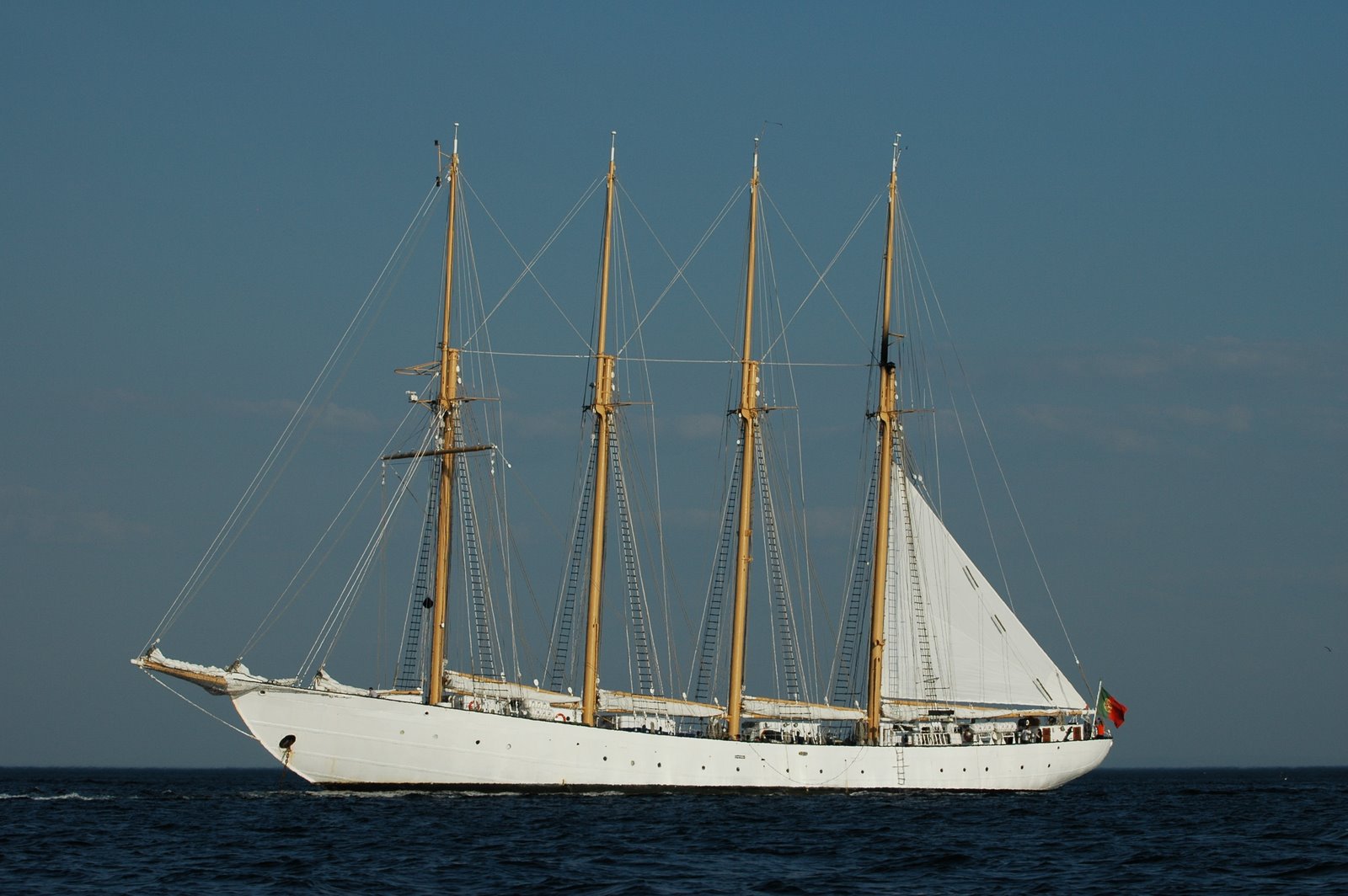
(Fotografia tirada na Horta, em 9 de Agosto de 2005).


Navegar a bordo do antigo bacalhoeiro português "Creoula" durante uma semana é o desafio proposto pela National Geographic e o Oceanário de Lisboa, incluindo a viagem a "obrigação" de colaborar nas tarefas de bordo. A primeira expedição Oceanário/National Geographic aos Açores realiza-se de 12 de Julho a 01 de Agosto, estando já abertas as inscrições para participar nesta viagem, dividida por duas etapas, existindo para cada uma delas uma tripulação diferente.

Os participantes da primeira etapa embarcam no "Creoula" no Parque das Nações na manhã do dia 12 de Julho, rumo a Ponta Delgada, onde deverão chegar cinco dias depois. Nos dias 18 e 19, os tripulantes poderão visitar a cidade de Ponta Delgada. Dia 20, o "Creoula" zarpa para a Horta, onde será feita a observação das baleias. O regresso a Lisboa do primeiro grupo de participantes, num avião da TAP, está previsto para o dia 22 de Julho. Nesse mesmo dia chegará à Horta o segundo grupo de participantes da expedição que começará esta "aventura" a observar as baleias.

Da cidade Horta, o "Creoula" parte para a Praia da Vitória (Ilha Terceira), onde permanecerá durante dois dias. A viagem de regresso para Lisboa tem início no dia 27 de Julho, estando a chegada à Base do Alfeite prevista para o dia 01 de Agosto às 10:00.

A bordo do veleiro, o dia-a-dia dos "lobos do mar" será preenchido com um conjunto de tarefas que terão de ser cumpridas em escalas horárias de trabalho pré-determinadas. Nesta expedição, que tem como objectivo dar a conhecer o habitat das baleias e sensibilizar todos os participantes para a protecção e preservação dos oceanos, poderão inscrever-se todos os cidadãos portugueses com idades compreendidas entre os 18 e os 40 anos.

As inscrições podem fazer-se através do cupão publicado na revista da National Geographic ou por telefone para o Oceanário de Lisboa. O preço da expedição é de 1.350 euros para o público em geral e de 1.250 para os sócios do Clube Oceanário e assinantes da National Geographic, valores que incluem já todas as despesas. O número máximo de participantes para cada uma das etapas é de 51 pessoas.

O antigo bacalhoeiro "Creoula" está hoje em dia transformado em "navio de treino de mar" e tem capacidade para 51 instruendos. O "Creoula" é um lugre (navio de vela normalmente empregue na pesca do bacalhau) de quatro mastros, construído no início de 1937 nos estaleiros da CUF para a Parceria Geral das Pescarias».

Fonte: Agência LUSA. Fotografia de Raquel Sabino Pereira.

segunda-feira, 29 de junho de 1998

CREOULA PROJECT CELEBRATES 500 YEAR-OLD RELATIONSHIP

St. John's, Newfoundland and Labrador

«This summer 100 young people will travel across the Atlantic as part of Expo '98 in one of the last remaining ships from the historic Portugese White Fleet. The Creoula voyage will celebrate Newfoundland and Labrador's heritage connections to Portugal and forge new ties across the Atlantic.

The Atlantic Canada Opportunities Agency (ACOA) and Human Resources Development Canada (HRDC) are providing financial assistance to the commemorative voyage.

The Honourable Fred J. Mifflin, Minister of Veterans Affairs and Secretary of State for ACOA, on behalf of the Honourable Pierre S. Pettigrew, Minister of Human Resources Development Canada (HRDC) announced today funding for the Creoula project in the amount of $10,000 (ACOA) and $72,000 (HRDC).

Minister Mifflin is in Portugal participating in a Team Canada event at Expo '98, a world forum and showcase with the theme "Oceans: A Heritage for the Future." Minister Mifflin toured the Creoula, which was on display at the Expo site, with Patricia Marsden-Dole, Canadian Ambassador to Portugal. "One of the purposes of this summer's voyage is to educate young Canadians about their cultural heritage and to exchange that kind of information with youth in Portugal", said Minister Mifflin. "At the same time, the youths will learn basic seamanship, safety and team building skills."

The Creoula is now used as a sea training ship. It will leave Aveiro, Portugal, early in August and will sail to St. John's with 25 Canadian and 25 Portugese youth aboard as working passengers. Later in the summer the ship will return to Portugal providing an experience for an additional 50 youth from both countries. Most of the 50 Canadian youth are from Newfoundland. All 100 youth are the children of families from both countries who fished the Grand Banks. The youth will take part in Expo '98 events in Lisbon before they leave Portugal.

"The project fosters links between the Marine Institute of Memorial University and the University of Aveiro in Portugal," said Minister Pettigrew. "The Marine Institute is training the Canadian youth in seamanship and marine safety in preparation for the voyage. It is important that we build connections like this while giving some of Canada's young people an opportunity to learn new skills that will help them in their future careers."

The Creoula project is being organized by The Heritage Foundation of Newfoundland and Labrador. For more information, contact: Randy Devine, ACOA (Tel: 709 772-2935) or David Earles, HRDC (Tel: 709 772-5346).»

sexta-feira, 24 de abril de 1998

«Volunteers sought for historic Trans-Atlantic voyage»

«Adventure on the high seas will be in store for 40 young Newfoundland and Labrador sailors this summer when a vessel of the famed Portuguese White Fleet covers the well-travelled nautical path between Portugal and St. John's. This summer, the Creoula, a four-masted sailing vessel that once travelled here annually with the White Fleet will return to Newfoundland and Labrador waters, this time on a cultural exchange, and with the participation of 40 young Newfoundlanders and Labradorians as crewmembers. They will be joined by 5 young Portuguese-Canadians selected from applicants in Montreal and Toronto.
The Creoula Voyage is a project of the Heritage Foundation of Newfoundland and Labrador, and represents an exciting opportunity for young Newfoundlanders and Labradorians who wish to serve as volunteer crewmembers, says foundation chairperson Victoria Collins. "The event will be a cultural opportunity for youth from Portugal and Canada to learn about the relationships that were established when the Portuguese White fleet regularly visited St. John's", Collins says. "The exchange will see about 20 young Canadian representatives fly to Portugal to join the Creoula for her departure from the port of Aveiro, while 25 more will meet the vessel when she arrives in St. John's and join her for the return trip."

An equal number of young people from Portugal will make up the other half of the crew for each leg of the trans-Atlantic voyage. "The project will also include several days of cultural activities in Portugal, including a visit to Expo `98, and further heritage-related activities in St. John's", says project manager Ken Corbett. "There will also be an opportunity to explore the new and developing technologies in each other's countries."

The positions are available to male and female Canadian citizens, aged 18 to 22, who are residents of Newfoundland and Labrador. Sailing experience is an asset, but not essential. All selected youth will participate in a 10-day training program conducted by the Marine Institute in St. John's that will include survival training, as well as general seamanship. Project kits containing additional information and application forms can be obtained from the Heritage Foundation in St. John's, the Marine Institute, as well as all high schools, public colleges, and the provincial Department of Tourism, Culture and Recreation in St. John's, or by calling (709) 739-1936. All applications must be received by May 15, 1998.

Names will be drawn at random if the number of successful applicants exceeds the available berths, and it is anticipated that the selected candidates will be notified in early June. The selected candidates will be required to take a medical examination, and be available for one of the two trans-Atlantic voyages between mid-July and late August, or mid-August to late September.

There is no financial requirement for the participants, other than personal spending money. The project will be funded by Federal and Provincial government departments and agencies as well as private corporations. Fishery Products International is the first company to become a sponsor, and opportunities for other corporate sponsors are currently being explored. Any company interested in becoming a sponsor should call (709) 739-1936 for more information.

The Creoula Voyage is a project of the Heritage Foundation of Newfoundland and Labrador, with the participation of the Marine Institute of Memorial University of Newfoundland, the City of St. John's, and the provincial Department of Tourism, Culture and Recreation.

Contact: Ken Corbett, Project Manager - the Creoula Voyage, (709) 739-1936

April 24, 1998 (Tourism, Culture and Recreation)
This release is being distributed on behalf of the Heritage Foundation of Newfoundland and Labrador»
Fonte: [News Releases] of the Government of Newfoundland and Labrador - Canada.

quinta-feira, 23 de abril de 1998

Portugal's White Fleet.

«The Portuguese have been fishing the Grand Banks of Newfoundland for centuries. And the Portuguese fishermen and Newfoundlander's worked and traded together in peaceful harmony. The Portuguese fishermen and fishing boats, known as the "WHITE FLEET" sailed from Portugal to the fishing banks of Newfoundland, Labrador, Greenland, Nova Scotia and Saint Pierre.
The White Fleet left Portugal in the spring and returned to Europe in the fall. Ships would land at Sydney (Cape Breton, Nova Scotia) or St. John's (Newfoundland) for provisions.
Traditionally the Portuguese used hooks and/or nets to catch Northern Cod. Their catch was preserved by a process called "Wet Salting" or "Green Salting". However, since the advent of factory trawlers and industrial commercial fishing, the way that we interact has changed.
In 1977 Canada extended it's coastal waters to 200 miles. At this time Portuguese and other European fishing vessels were discouraged from using Canadian ports.
Today over fishing continues. In order to protect the vulnerable groundfish of the Grand Banks and the Flemish Cap, the Green Party advocates a unilateral extension of Canadian sovereignty to 350 miles from Newfoundland's coast.

The CREOULA, a Portuguese Navy training vessel, sailed from Lisbon (Lisboa) to St. John's to commemorate Portugal's cod fishery heritage. The Creoula made 37 voyages to the Grand Banks. The Last was in 1973. The Creoula could carry about 12,800 quintals of "Green Cod" (about 800 tonnes) together with about 60 tonnes of cod liver oil.»

Fonte: [Infonet Saint John’s]

quinta-feira, 1 de janeiro de 1970

«COD FISHING AIDED BY "MILD" SUMMER». Portuguese Schooner Catches 900 Tons in the Greenland Area and on Grand Banks

By ALAN VILLIERS, Special to THE NEW YORK TIMES.
October 16, 1950, Monday
(Page 38, 1535 words)

PONTA DELGADA, Azores, Sept. 23 - Scupper-deep with 900 tons of Greenland and Grand Banks cod, upwards of twenty tons of high-grade cod-liver oil and thirty tons of salted tongues, codfish cheeks and backbone membranes ... [ END OF FIRST PARAGRAPH ].